Dental anxiety is more common than most patients realize, and it is one of the primary reasons adults avoid care for longer than they should. For some patients, the discomfort is mild—nervousness before an appointment that fades once they are in the chair. For others, anxiety is severe enough that routine visits feel genuinely difficult to get through, and the anticipation alone is enough to cause them to cancel or postpone. Sedation dentistry exists to address that barrier, and for patients who struggle with dental anxiety, understanding the available options is worth doing. If you are a patient in Coralville who has questions about managing anxiety during dental treatment, contact our team at Coral West Dental to discuss what options are available for your situation.
Sedation Dentistry
Sedation dentistry refers to the use of medication to help patients relax during dental procedures. It is not the same as general anesthesia—most forms of dental sedation leave the patient conscious and able to respond to instructions. The goal is to reduce anxiety, minimize discomfort, and make treatment more tolerable for patients who would otherwise struggle to get through an appointment. Sedation also allows dentists to complete more work in a single visit, since a relaxed patient is easier to treat efficiently.
Types of Sedation Used in Dental Settings
Nitrous Oxide
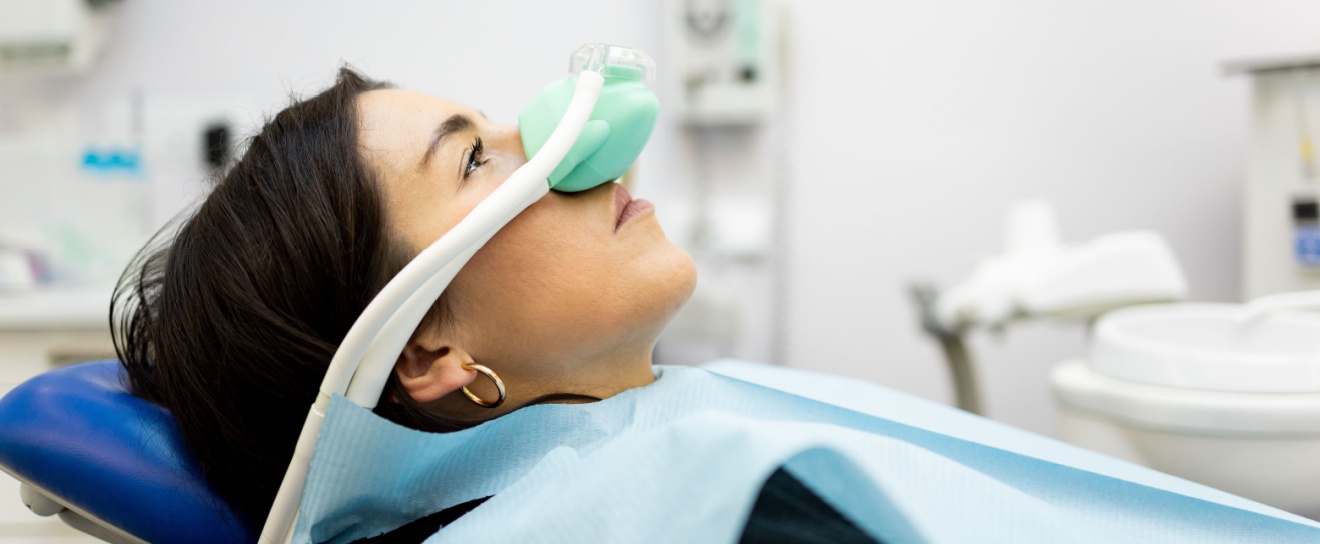
Nitrous oxide—commonly called “laughing gas”—is the most widely used form of dental sedation. It is administered through a small mask placed over the nose and takes effect within a few minutes. Patients remain fully conscious and responsive but feel calm and detached from the procedure. The effects wear off quickly once the mask is removed, and most patients can drive themselves home afterward. Nitrous oxide is appropriate for mild to moderate anxiety and is commonly used for both adult and pediatric patients.
Oral Sedation
Oral sedation involves taking a prescribed medication—typically a benzodiazepine—before the appointment. The pill is taken an hour or so before the procedure and produces a deeper level of relaxation than nitrous oxide. Patients are still conscious but may feel drowsy, and some have limited memory of the appointment afterward. Because oral sedation takes longer to wear off, patients need someone to drive them home. It is a good option for patients with moderate to significant anxiety or for longer procedures.
IV Sedation
Intravenous sedation delivers medication directly into the bloodstream, producing a deeper and more controllable level of sedation than oral methods. A trained provider monitors the patient throughout the procedure and adjusts the level of sedation as needed. Patients are typically in a semi-conscious state – they can still respond to verbal prompts but are deeply relaxed and retain little to no memory of the appointment. IV sedation is typically used for complex procedures, patients with severe anxiety, or cases where a significant amount of treatment needs to be completed in one visit.
Local Anesthesia
Local anesthesia is not sedation in the traditional sense, but it is worth including here because it is the foundation of comfortable dental treatment for most patients. Injecting local anesthetic numbs the specific area being treated so the patient feels pressure but not pain. For patients whose anxiety is primarily about pain rather than the environment of the dental office, effective local anesthesia administered by a dentist who takes care with the injection technique can make a significant difference on its own.
Who Is a Candidate for Sedation
Sedation is appropriate for a range of situations beyond straightforward dental anxiety. Patients with a strong gag reflex that makes treatment difficult, patients who have had traumatic dental experiences in the past, patients who require a significant amount of work to be completed, and patients with certain physical or cognitive conditions that make sitting still for extended periods difficult are all candidates worth discussing with their dentist.
Sedation is not appropriate for every patient. Medical history, current medications, and the specific procedure being performed all factor into whether a given type of sedation is safe and suitable. A consultation with the dentist before the appointment covers these considerations and determines the best approach.
Managing Anxiety Without Sedation
For patients with milder anxiety, there are practical measures short of sedation that many dental offices use to make appointments more comfortable. Clear communication before and during procedures—explaining what will happen before it happens—removes much of the uncertainty that drives anxiety. Allowing patients to signal when they need a break gives them a sense of control. Some offices use distraction tools like music or television. A dentist who takes the time to build rapport over several appointments often finds that a patient’s anxiety diminishes significantly once they trust the provider and the environment.
Taking the Next Step
If dental anxiety has been a barrier to getting the care you need, it is worth having a direct conversation with a dental provider about your options before you let another appointment slip by. The consequences of avoiding dental care compound over time, and there are workable solutions for most levels of anxiety. To schedule an appointment and discuss your concerns with our team at Coral West Dental, use our online scheduling page.