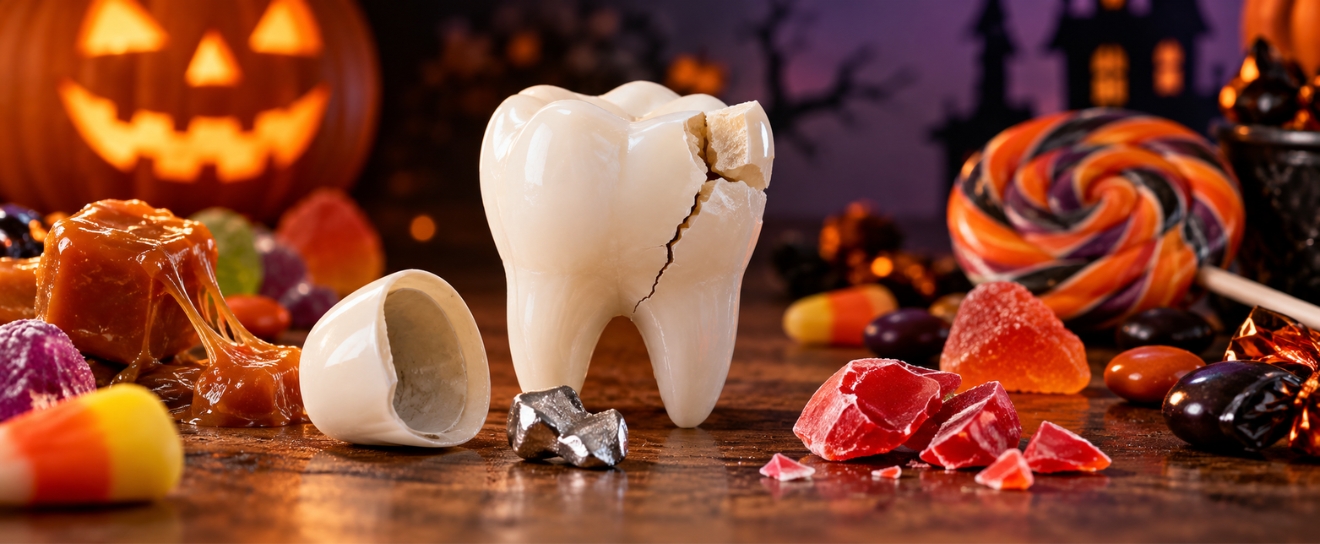
Sticky candy can pull at a loose filling or crown, while hard candy can crack a tooth or restoration when you bite down. Sudden pain, a missing restoration, a sharp edge, or a broken tooth calls for a dental evaluation. Coral West Dental provides crowns and bridges in Coralville and can assess damage that appears during Halloween treats or holiday snacking.
Sticky Candy Can Expose an Existing Weakness
Caramels, taffy, gummies, and similar candies cling to the grooves and edges of teeth. A well-sealed restoration is designed for normal chewing, but an older filling or crown may already have a worn edge, hidden crack, or weakened cement. A sticky piece can lift the restoration and reveal a problem that was developing underneath.
You may feel the filling or crown shift, find it in your mouth, or notice a new hollow area with your tongue. The tooth can become sensitive to air, temperature, pressure, or sweets. Save a dislodged crown or restoration in a clean container and bring it to the appointment. A dentist must examine the tooth before deciding whether the restoration can be recemented or needs replacement.
Hard Candy Can Fracture Enamel and Restorations
Jawbreakers, lollipops, candy-coated nuts, popcorn kernels, and ice create concentrated pressure. A tooth with a large filling, existing crack, or thin wall of enamel may break under that force. Crowns and veneers can chip, and a bridge can be damaged if a hard item is crushed beneath it.
A minor chip may feel rough without causing pain. A deeper fracture can create sharp pain, temperature sensitivity, or discomfort when you bite and release. Any visible pink or red area inside a broken tooth needs urgent attention because the pulp may be exposed.
What to Do When a Filling or Crown Comes Out
A calm, step-by-step response can protect the exposed tooth and preserve useful information for the dentist:
- Rinse gently with lukewarm water, then look at the area without probing it with a fingernail or sharp object.
- Find the filling, crown, veneer, or tooth fragment if possible. Place it in a clean container and bring it to the appointment.
- Brush carefully to remove candy and food debris. Stop if cleaning causes significant pain or bleeding.
- Chew on the other side and avoid very hot, cold, sweet, hard, or sticky foods that can irritate the exposed tooth.
- Call the dental office and explain what came loose, when it happened, and whether the tooth is painful, swollen, bleeding, or sensitive.
Temporary dental cement sold for short-term use may protect some teeth until an appointment, but follow the package directions and dental guidance. Household glue can damage the tooth and complicate treatment. A crown also needs correct positioning and a stable tooth beneath it, so forcing it into place can create a choking hazard, damage the remaining tooth, or alter the bite.
When a Broken Tooth Needs Faster Care
Call promptly for severe or persistent pain, swelling, bleeding, a tooth split into sections, or a crown that came off a tooth after root canal treatment. Seek emergency medical care for major facial trauma, uncontrolled bleeding, or breathing and swallowing difficulty.
If the broken tooth has a sharp edge, dental wax can sometimes cover it temporarily and protect the tongue or cheek. Use over-the-counter pain medicine only as directed and avoid placing medication directly against the gum.
Protect Veneers and Bridges During Treat Season
Dental veneers cover the front surface of selected teeth and can chip under direct force. Bite hard foods with the back teeth when appropriate, cut firm treats into smaller pieces, and avoid using teeth to open packaging. A bridge also needs careful cleaning around and beneath the replacement tooth because trapped sugar and plaque can affect the supporting teeth.
Candy frequency influences how long teeth are exposed to acid produced by oral bacteria. Enjoying a treat with a meal creates a shorter exposure period than grazing throughout the day. Drink water afterward and brush twice daily with fluoride toothpaste. Wait until you have proper brushing supplies rather than scrubbing aggressively immediately after acidic candy or beverages.
A Dental Visit Can Reveal the Full Extent of Damage
The visible break may represent only part of the problem. The dentist can check the remaining tooth structure, the fit of the restoration, the bite, and the health of the pulp. Dental images may help show decay, root changes, or a fracture beneath the gumline. Avoid waiting for the next cleaning when a restoration has moved or broken.
A restoration that appears intact may still need attention if the bite suddenly feels high or the tooth becomes sensitive. Small changes can indicate that the crown, filling, bridge, or veneer shifted under pressure. Continuing to chew normally can place repeated force on the affected area before the dentist has a chance to examine it.
Treatment could involve smoothing a small rough area, placing a new filling, bonding a chip, recementing or replacing a crown, protecting the tooth with a new restoration, or treating the pulp when damage reaches the center of the tooth. The recommended option depends on what remains healthy and stable.
After a Halloween dental mishap, schedule an appointment with Coral West Dental for a loosened filling, crown, veneer, bridge, or piece of tooth. Bring any recovered restoration and tell our team whether the tooth is painful, sensitive, swollen, or difficult to bite on.