
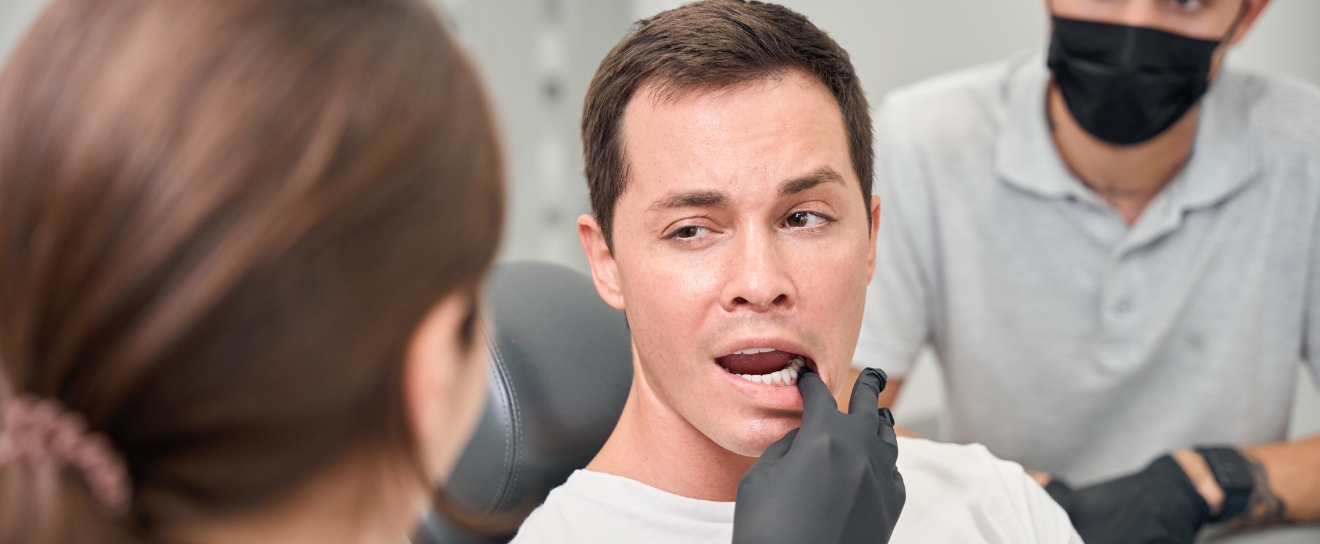
A loose permanent tooth can often be saved after an injury, especially when a dentist evaluates it quickly and the root and surrounding bone remain treatable. The tooth may need repositioning, stabilization, follow-up imaging, and monitoring of the pulp. Contact Coral West Dental for emergency dental care in the Coralville area as soon as an adult tooth becomes loose, shifted, or painful after a fall, collision, or sports impact.
Different Injuries Can Make a Tooth Loose
A direct blow can stretch or tear the ligament that holds a tooth in its socket. The tooth may remain in its usual position while feeling mobile and tender. A stronger impact can push it sideways, deeper into the socket, or partly out of the socket. The bone around the tooth can also fracture.
These injuries may look similar at home, yet they require different treatment. A dentist will check the tooth’s position, movement, bite, gum tissue, neighboring teeth, and facial bones. Dental images can show changes around the root and help identify bone or root fractures.
What to Do Immediately
Leave the tooth in place and avoid testing its movement with your fingers or tongue. Bite changes, bleeding, and swelling can make the injury feel alarming, but repeated movement can strain the damaged tissues.
Rinse gently with clean water if dirt or debris is present. Hold a cool compress against the outside of the face to limit swelling. Choose soft foods and avoid chewing on the injured side. Call the dental office and explain when the injury happened, how the tooth moved, and whether the person lost consciousness or has other facial injuries.
A mouthguard, helmet, or face protection reduces injury risk during many fall sports, but protective gear cannot prevent every collision. Any permanent tooth that changes position after an impact needs prompt dental care even when pain is mild.
How a Dentist May Stabilize the Tooth
If the tooth has shifted, the dentist may gently reposition it. A flexible splint can connect the injured tooth to nearby stable teeth while the ligament heals. The length of time a splint stays in place depends on the type of injury and whether the bone or root is involved.
The dentist will also examine cuts in the lips and gums and look for pieces of a broken tooth. Treatment may include smoothing or restoring damaged enamel, protecting exposed dentin, or addressing a fracture that reaches the pulp.
Follow-up visits are important. The tooth’s nerve and blood supply can be damaged even when the crown looks intact. The dentist may repeat sensitivity tests and X-rays over time. Some teeth recover without additional treatment. Others develop signs that the pulp is no longer healthy and need root canal treatment to remain in the mouth.
Factors That Affect the Outlook
The chance of saving a loose tooth depends on several details: how far it moved, the direction of displacement, damage to the root or socket, the stage of root development, and the time between the injury and treatment. Gum health and the ability to keep the area clean also influence healing.
A loose tooth caused by advanced gum disease is different from a tooth loosened by one recent impact. Tell the dentist if the tooth already moved before the injury or if there has been bleeding, recession, or bone loss around it. Coral West Dental’s family dentistry services include ongoing examinations that can document the condition of the teeth and gums before an accident occurs.
Eating and Cleaning During Recovery
Follow the dentist’s instructions for soft foods and activity. Cut food into small pieces and chew away from the injured area. Keep brushing, using a soft toothbrush and gentle pressure around the tooth or splint. Cleanliness supports gum healing, while forceful brushing can make the area bleed.
Wear any recommended mouthguard when returning to sports. The dentist should guide the timing of that return because another impact during early healing can change the outcome. Attend every follow-up visit even if the tooth feels firm again.
Warning Signs During Healing
Call the dentist if pain or swelling increases, the tooth becomes darker, the gum develops a bump, the bite changes, or the splint loosens. Fever, facial swelling, or drainage requires prompt attention. These signs can indicate infection, pulp damage, or a change in the tooth’s position.
Treat a loose adult tooth as an urgent injury and request an appointment with Coral West Dental. Fast evaluation and careful follow-up give the tooth its best opportunity to heal and remain functional.